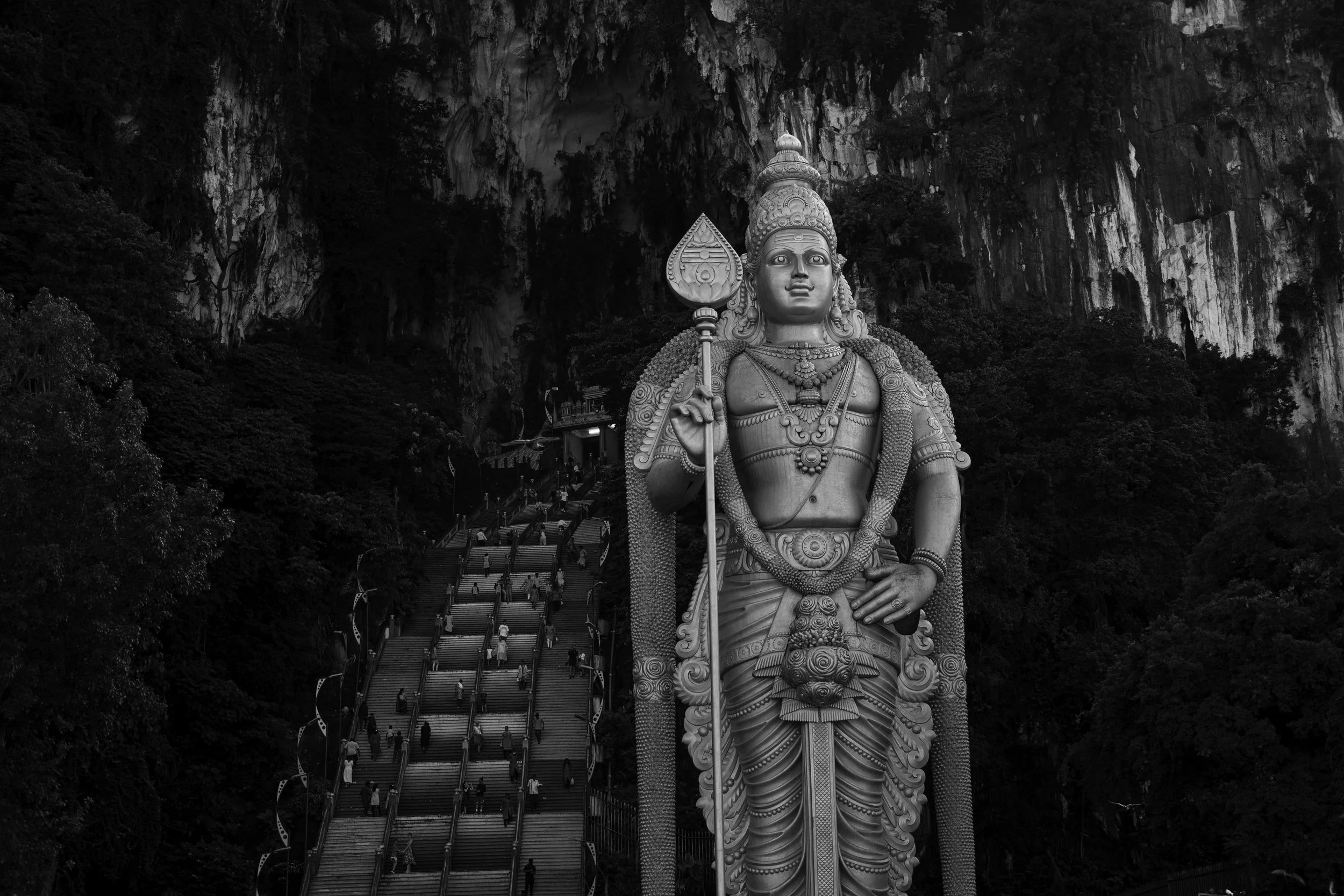
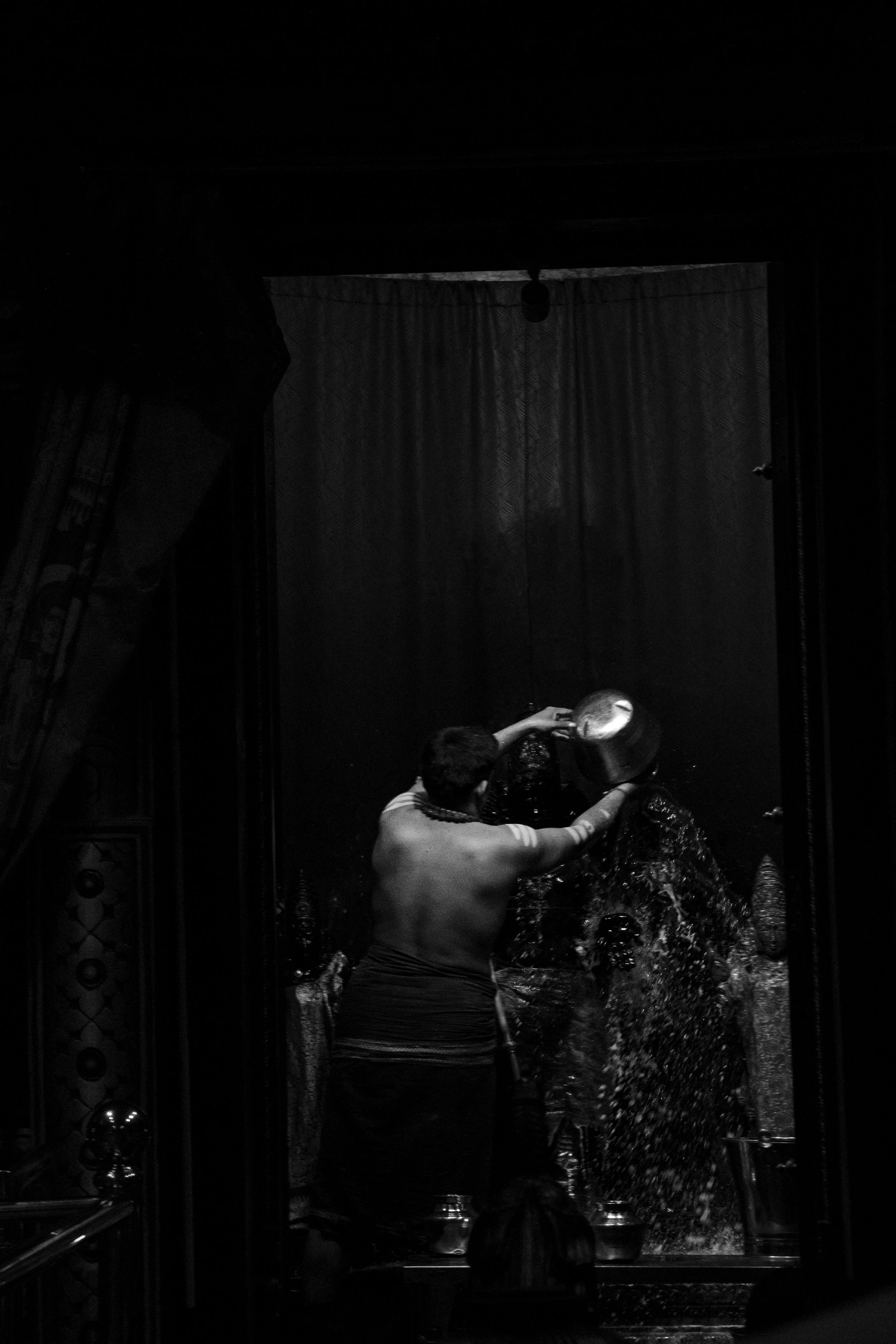
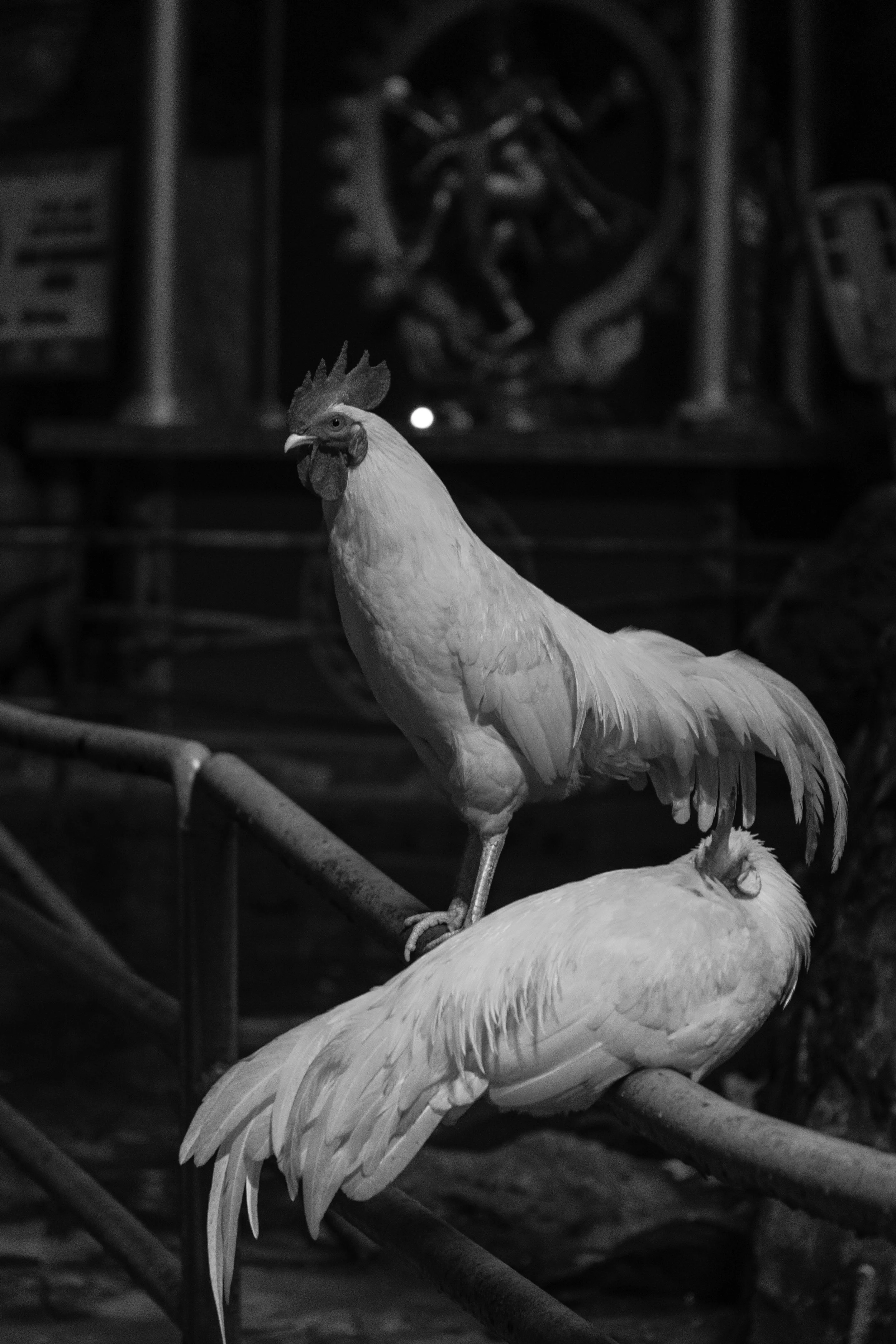
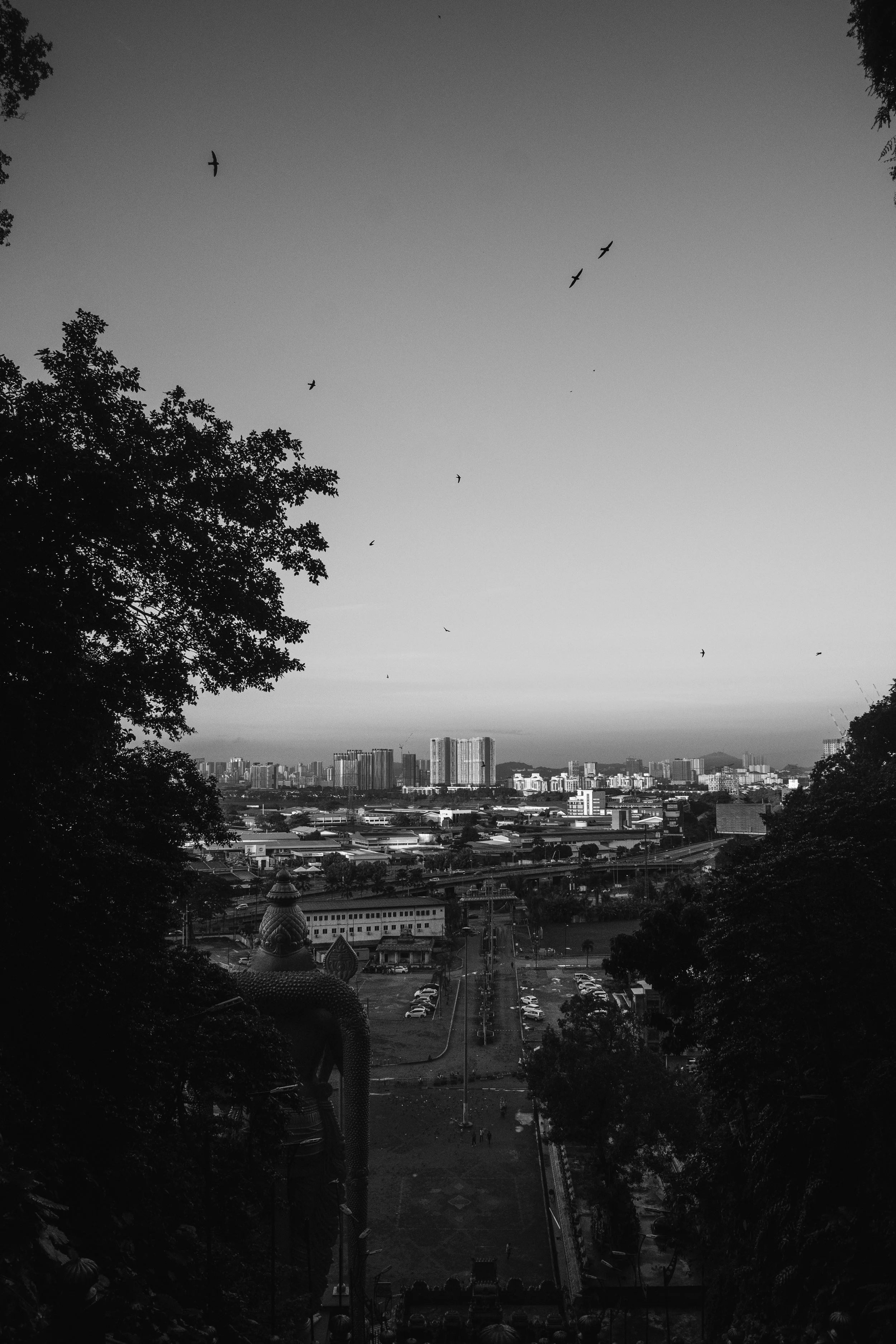
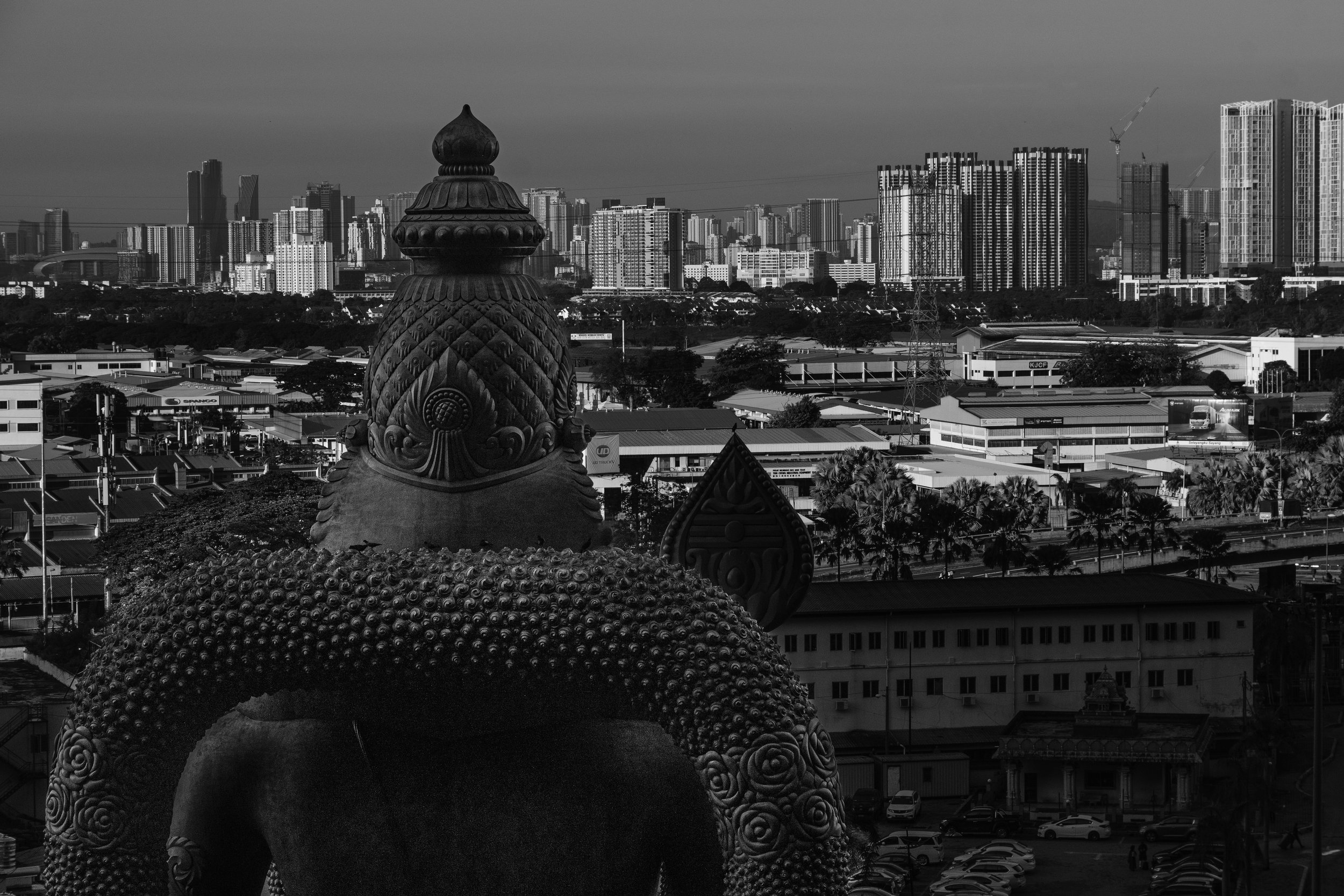
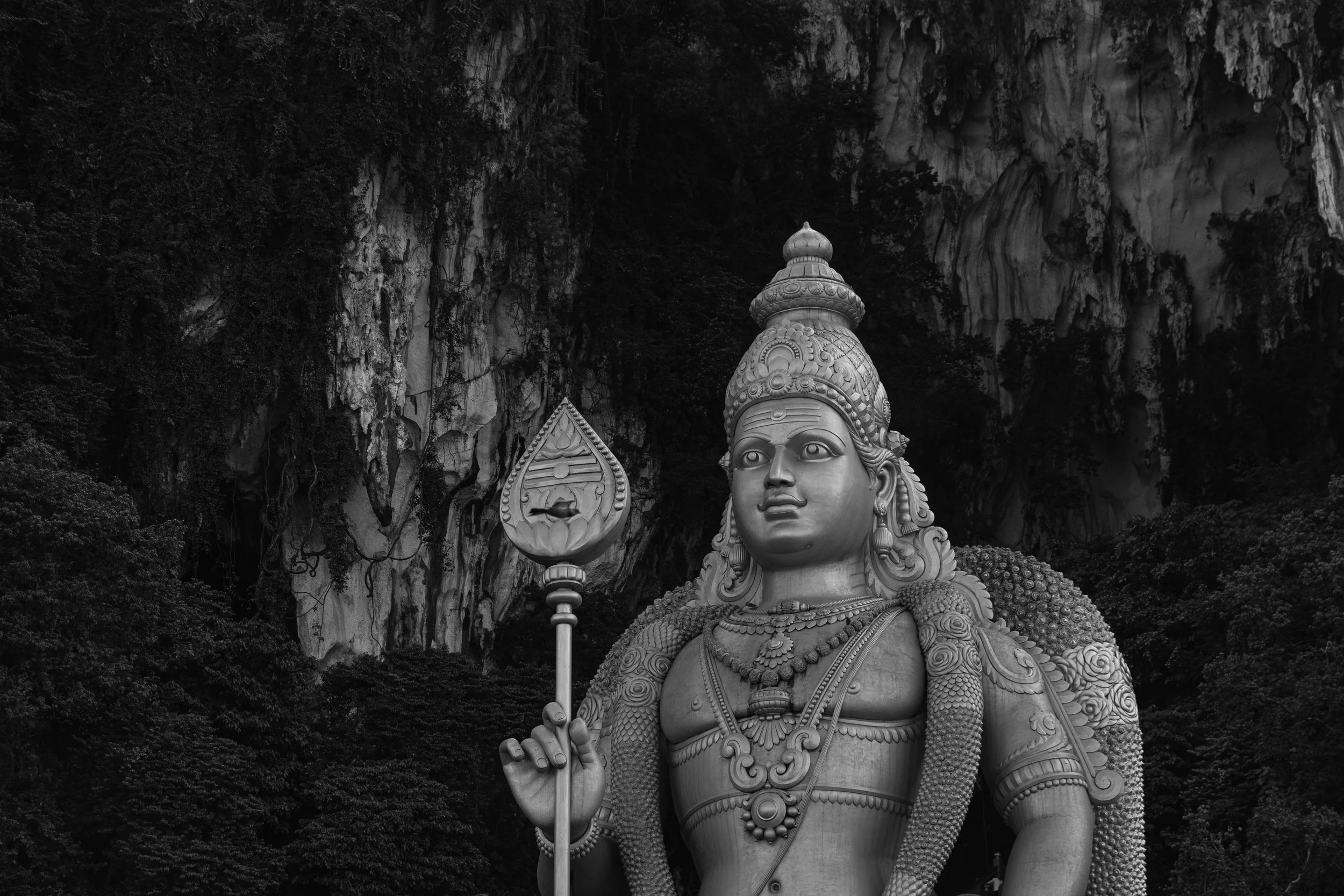
Arohara is a series from Batu Caves, Kuala Lumpur, a living sacred landscape where geology, devotion and worship are contained within contemporary urban life.
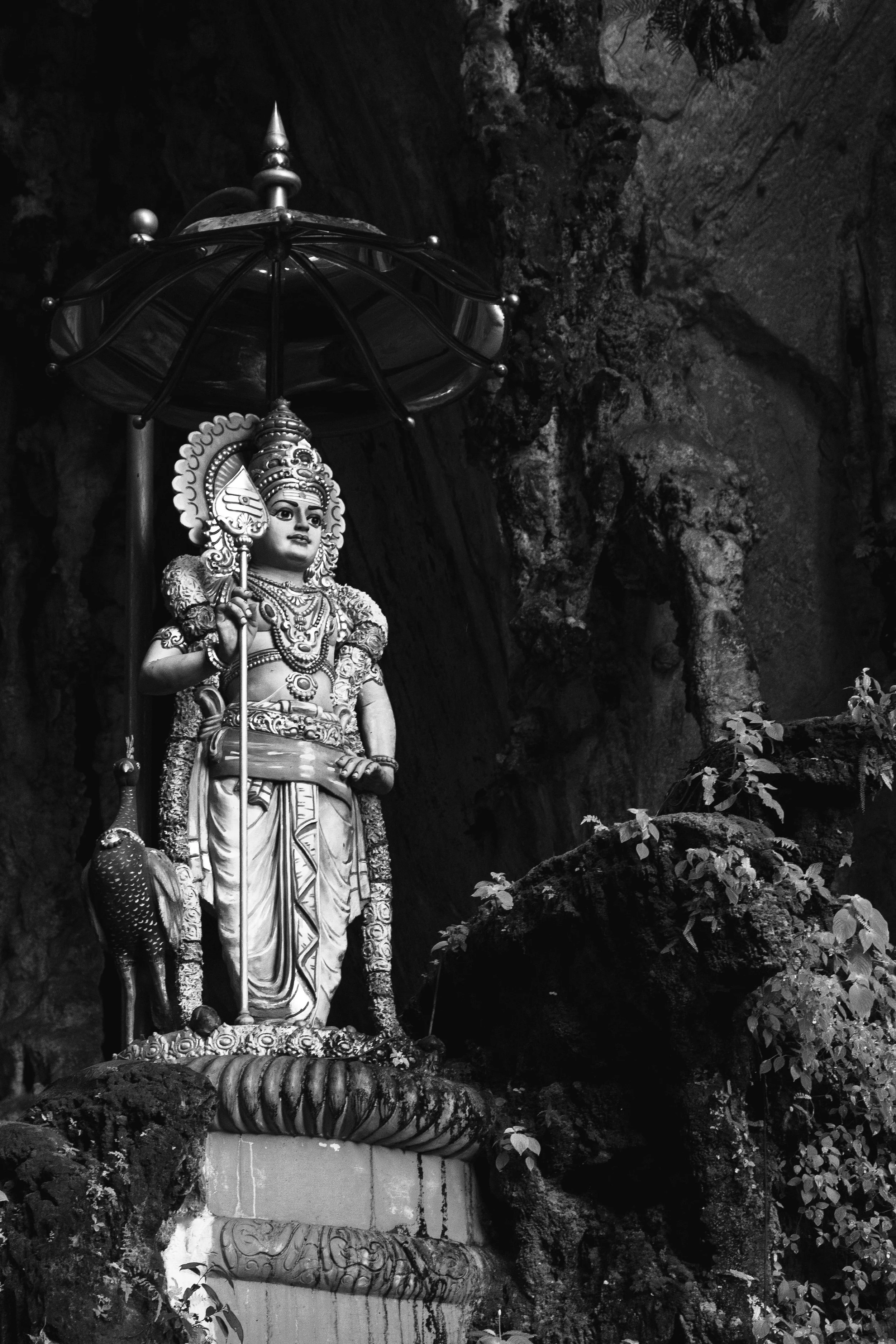
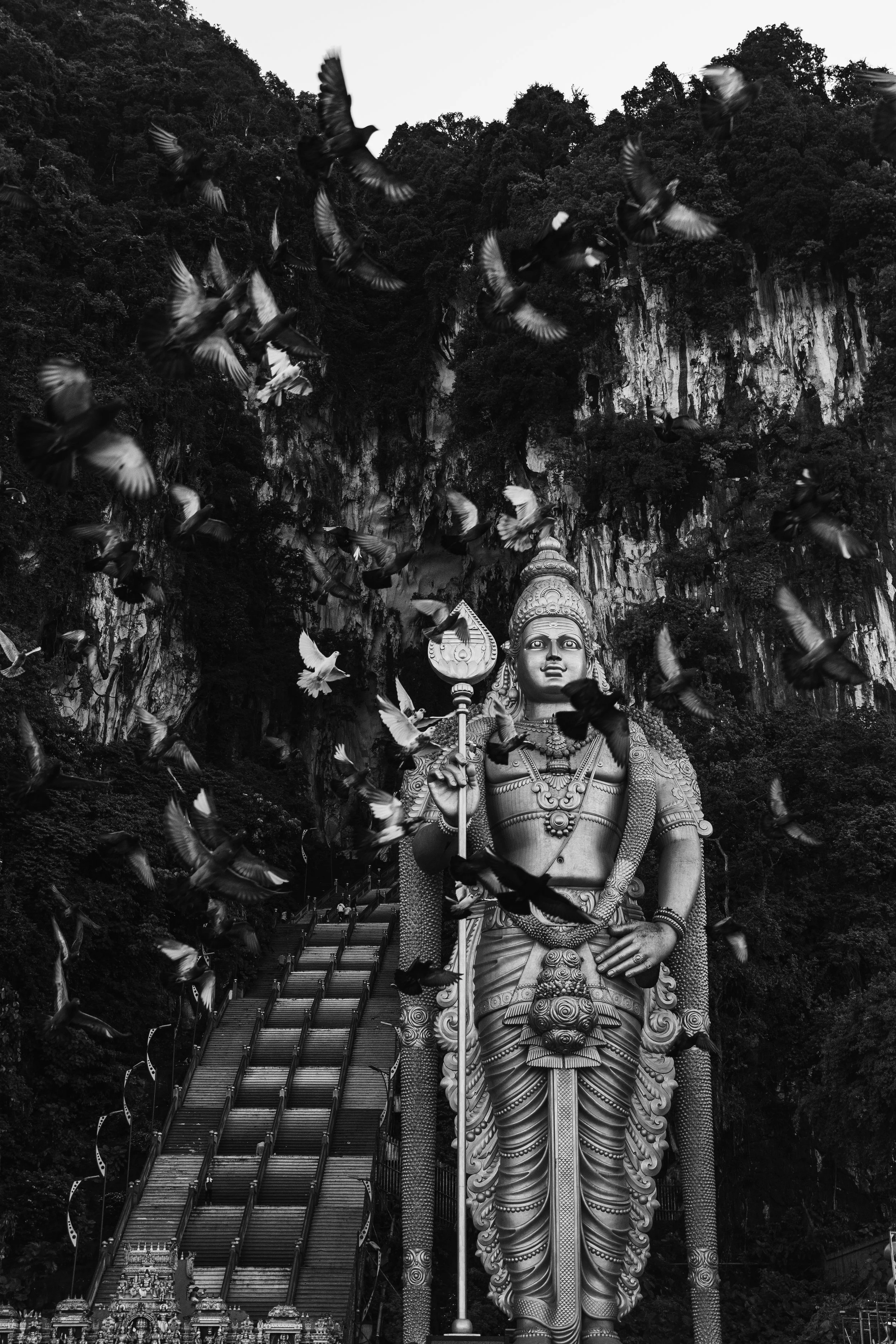
The air was quiet. Devotees climbed in silence at six in the morning, but the huge exterior walls of limestone that hold the Batu caves seemed to echo the chants from another time. Muruga’s presence here, at 140 feet tall, is not just visual. It’s as if the stone itself has absorbed the chants and held space for devotion and surrender.
I went to Batu Caves for the first time on a wet morning. I remember standing at the entrance of the caves after the climb, looking out at Kuala Lumpur waking up in golden light — the whole city luminous, towers catching the sunrise, the world fully accounted for. And then I turned and walked in, and all of that ceased to exist.
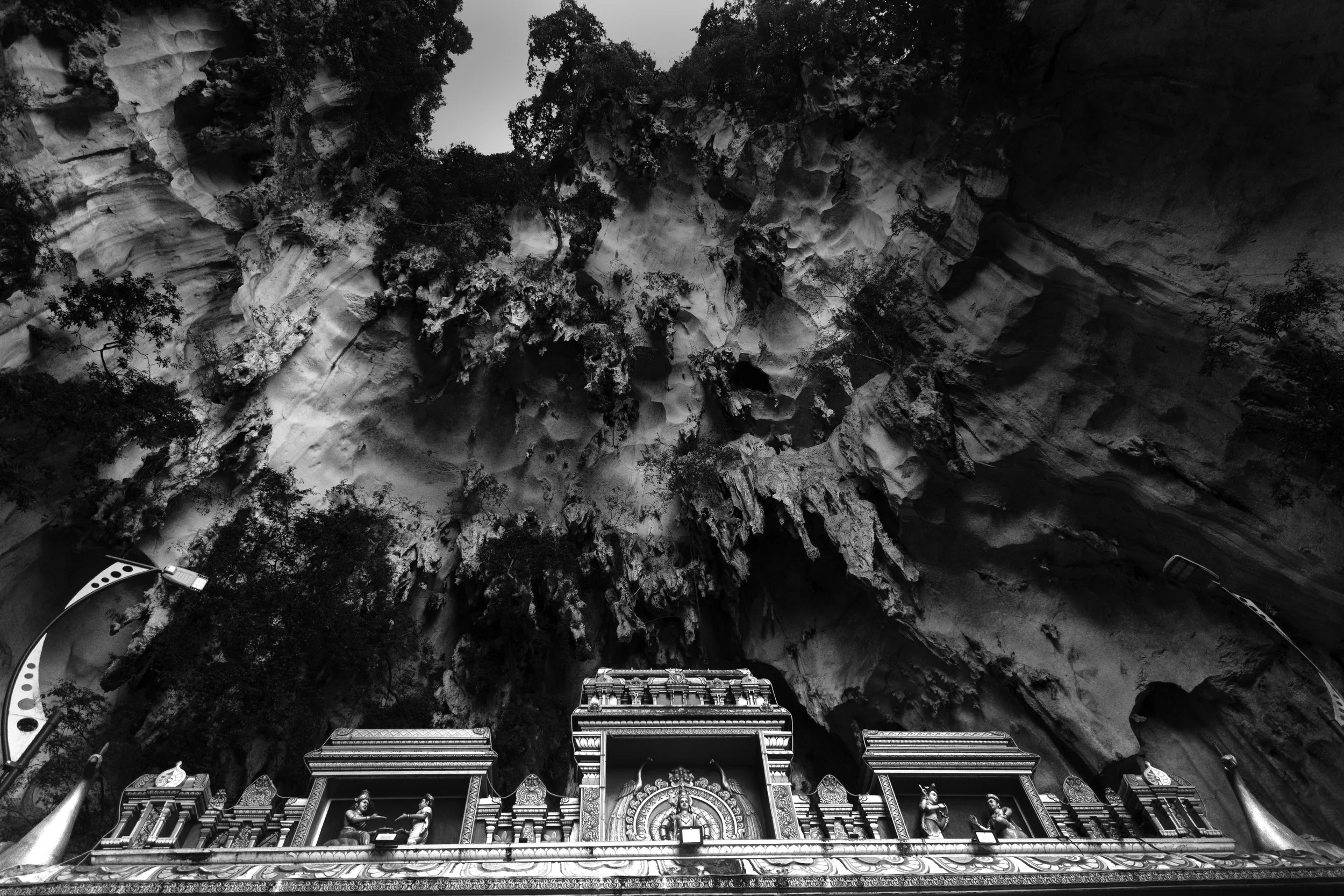
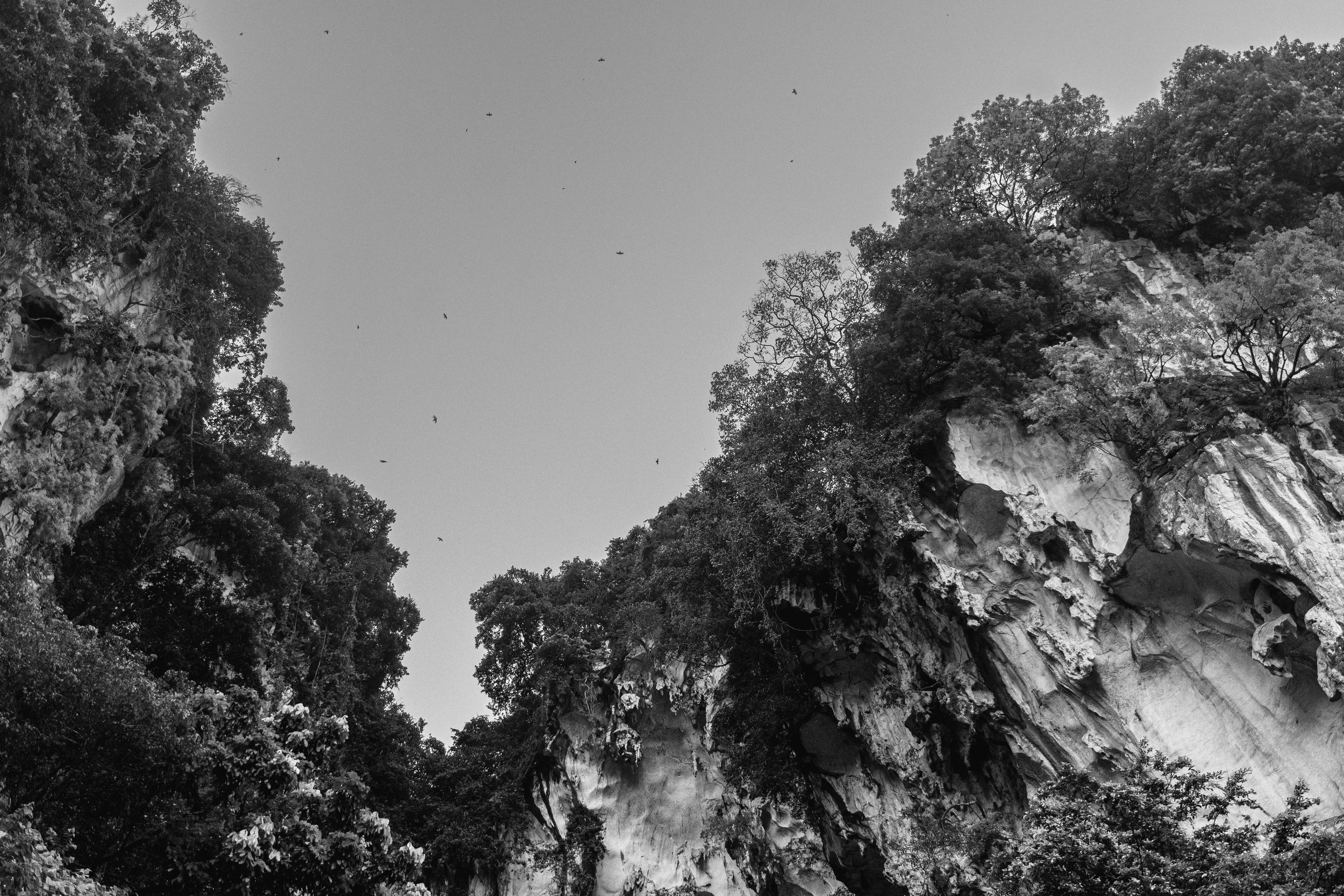
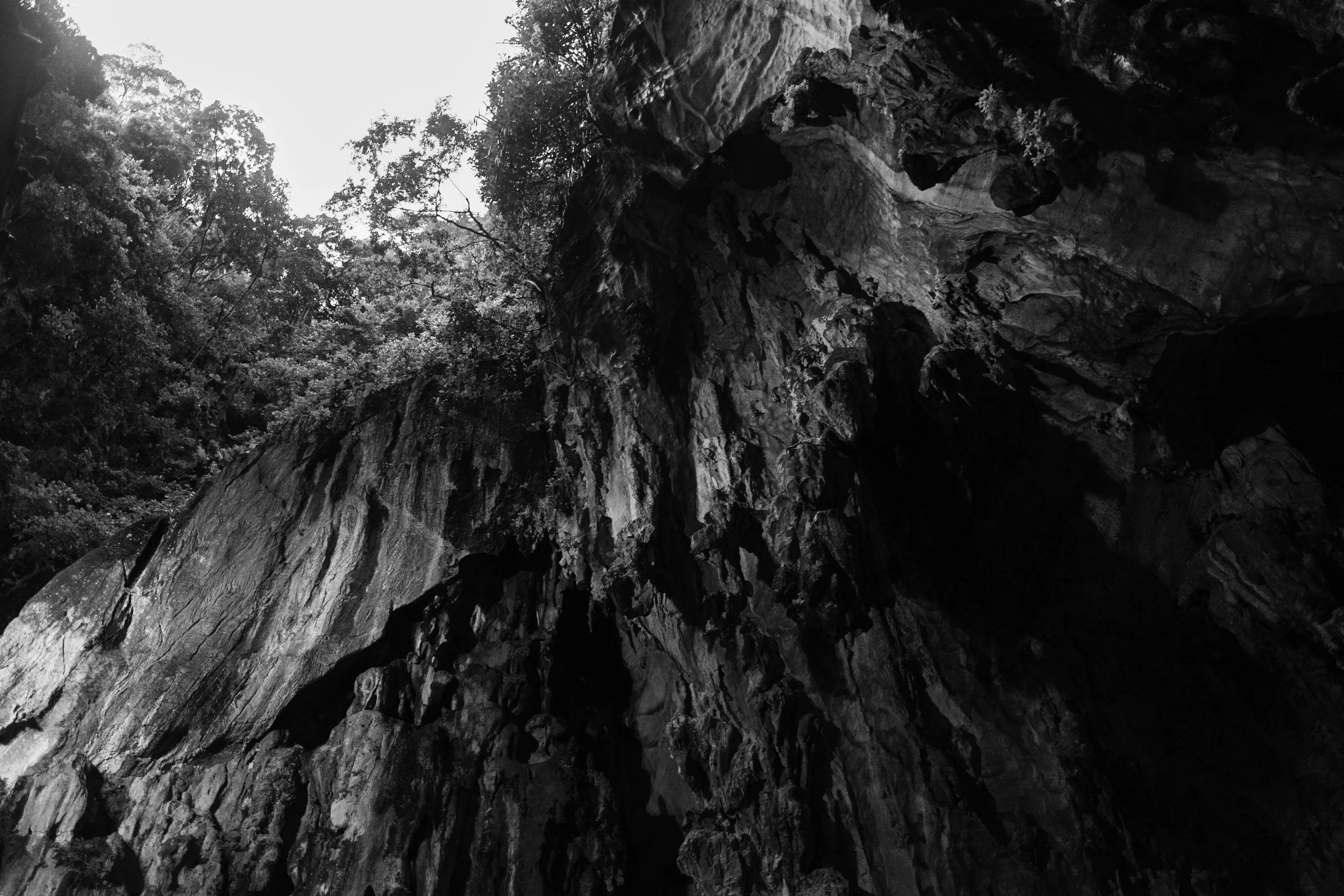
The scale is the first thing. These are not small caves — not crevices you crouch through. The rock rises and rises, opening into chambers so vast the ceiling disappears into darkness above you. In some places, the formation opens to the sky, and you can see trees growing from the top of the rock, swallows and pigeons flying so far above they look like houseflies. Everything here operates at a proportion that makes you feel, pleasantly, lost.
And then there is the darkness. Inside, there is no morning or evening, no sense of how much time has passed. The shrines glow from their lamps. Electric lights illuminate the way in and out but they feel conspicuously weak against the dark shadows formed by the craggy walls. Standing there, with the city's golden morning still fresh in your memory, you realise you have crossed into a different kind of time altogether — not past or future, just a stillness that the rock preserves into eternity.
This series is my attempt to stay inside that stillness long enough to bring something back.
Arohara! Arohara!